 Safety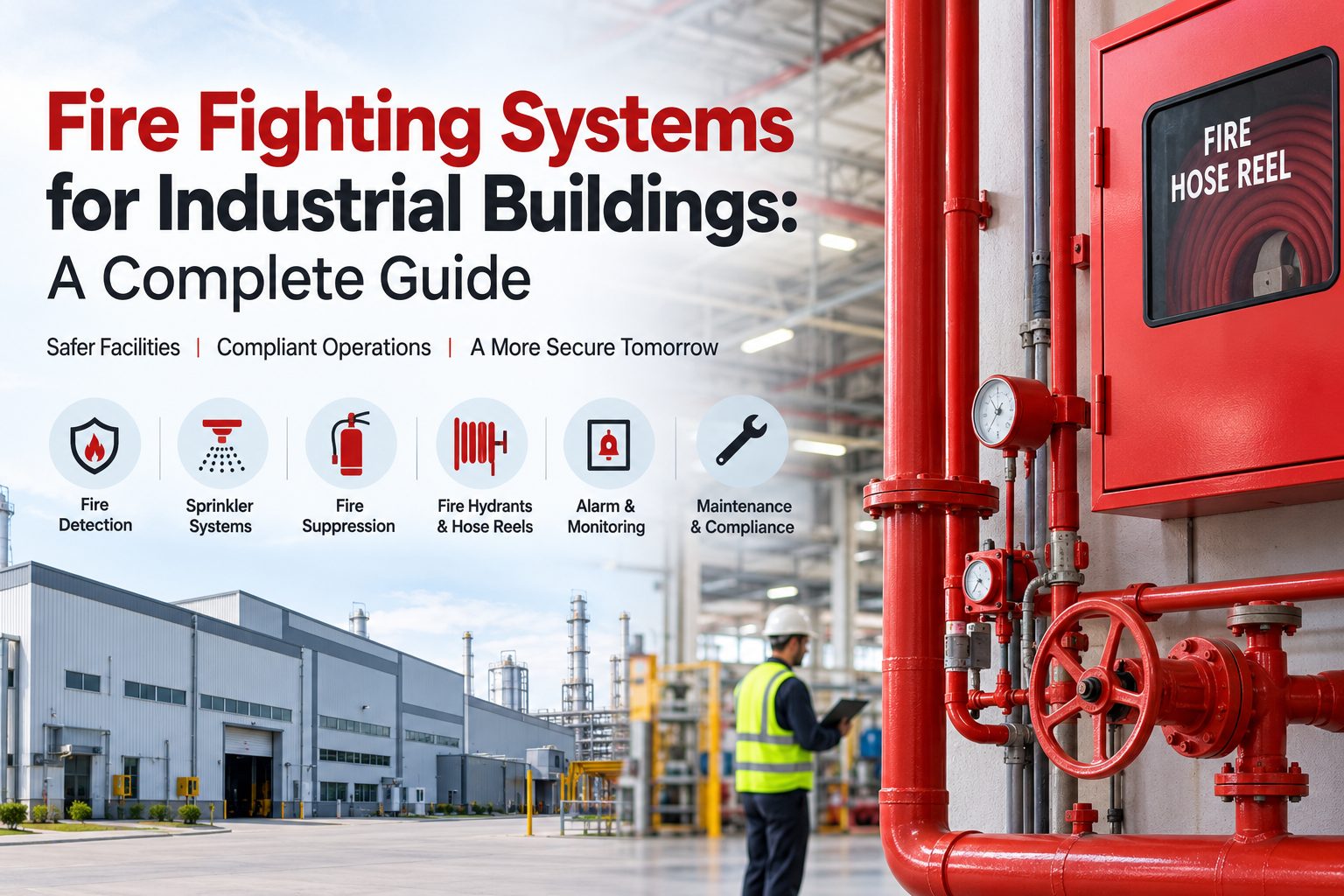
Fire Fighting Systems for Industrial Buildings: A Complete Guide
Industrial buildings are very different from homes or small offices. They may have large machinery, electrical equipment, chemicals, raw materials, packaging materials, warehouses and production lines. A small fire can therefore become a major incident within a very short time. This is why having the right fire fighting system is not just about meeting a compliance requirement. It is about protecting people, property, machinery and business operations. For companies planning a new industrial facility, expanding an existing plant or upgrading their current fire protection infrastructure, choosing experienced fire safety contractors in Pune can make a significant difference. In this guide, we will understand what fire fighting systems are, what they include, how they work and what businesses should consider before installing them.
What Is a Fire Fighting System?
A fire fighting system is a combination of equipment and infrastructure designed to control or extinguish a fire and prevent it from spreading. Depending on the type of industrial building, the system may include: Fire hydrant systems Fire sprinkler systems Fire pumps Fire water tanks Fire hose reels Fire extinguishers Fire alarm and detection systems Fire suppression systems Fire hydrant piping Fire pump rooms Emergency response equipment The important thing to understand is that these systems should not be looked at individually. A properly designed fire protection setup works as a complete system, where different components support each other during an emergency.
Why Do Industrial Buildings Need Fire Fighting Systems?
Industrial facilities face several potential fire hazards. For example, a manufacturing plant may have electrical panels, motors and machinery operating continuously. A warehouse may store large quantities of packaging material or combustible goods. A chemical facility may handle flammable substances. Some common industrial fire risks include: Electrical short circuits Overheated machinery Flammable materials Combustible storage Welding and hot work Fuel and oil Chemical processes Poor housekeeping Improper storage Faulty electrical equipment The consequences can go far beyond physical damage. A serious fire can result in: Production downtime → Equipment damage → Inventory loss → Employee risk → Project delays → Financial loss → Business disruption This is why fire protection should be considered during the planning and design stage, rather than after the building is already operational.
Key Components of an Industrial Fire Fighting System
Fire Hydrant System A fire hydrant system provides water through a network of pipes to designated hydrant points around the facility. During a fire emergency, trained personnel or the fire response team can use hoses connected to hydrants to fight the fire. A typical system may include: Hydrant piping Hydrant valves Hose boxes Fire hoses Branch pipes Fire pumps Water storage For a large industrial facility, proper design and installation of the hydrant network is critical.
Fire Sprinkler System Fire sprinklers are designed to release water when the temperature around an individual sprinkler head reaches its operating point. One common misunderstanding is that all sprinklers open at the same time. In many systems, individual sprinkler heads operate based on the heat they detect. This allows the system to respond directly to the area affected by the fire. Sprinklers can be particularly important in: Warehouses Manufacturing facilities Storage areas Commercial buildings Industrial production areas The design needs to take into account factors such as storage arrangement, building layout and the nature of the materials stored.
Fire Pumps A fire protection system is only useful if it can deliver water at the required pressure and flow. That's where fire pumps become important. Depending on the system design, a fire pump arrangement may include different types of pumps and associated equipment to maintain the required water supply for firefighting. The pump room should also be properly designed, installed, tested and maintained. This is one reason businesses should work with experienced fire protection company in Pune rather than selecting individual equipment without considering the complete system.
Fire Water Storage Fire fighting systems need an adequate water source. Industrial facilities may therefore require dedicated fire water storage depending on their requirements. The capacity and arrangement should be determined based on the facility's fire protection design and applicable requirements. Simply having a large water tank does not automatically mean that the facility has an effective fire fighting system. The water needs to reach the right location with the required flow and pressure when it is needed.
Fire Extinguishers Fire extinguishers are among the first pieces of equipment employees may use during the early stage of a small fire. However, the extinguisher should be suitable for the type of fire. Different industrial environments can have different fire risks, so extinguisher selection and placement should be based on the facility's actual hazards. More importantly, extinguishers should not simply be installed and forgotten. They need regular inspection, servicing and accessibility checks.
Fire Fighting System and Fire Alarm System: Why Both Matter
A fire fighting system and a fire alarm system perform different but connected roles. The fire alarm system helps detect and alert people about a fire. The fire fighting system helps control or extinguish the fire. Think about it this way: Detection → Alert → Response → Fire Control → Evacuation If the alarm detects a fire but there is no effective firefighting response, the facility remains vulnerable. Similarly, having firefighting equipment without an effective detection and emergency response process can delay action. This is why an integrated approach is important.
How Is a Fire Fighting System Planned for an Industrial Building?
A professional project normally begins with understanding the facility. Before designing the system, the contractor or engineering team may need to evaluate: Building layout Occupancy Manufacturing process Fire load Storage type Material being stored Building height Warehouse arrangement Electrical installations Hazardous areas Water availability Access for emergency response Based on these factors, the appropriate fire protection strategy can be developed. This is where experienced fire safety contractors in Pune can add significant value. A good contractor should not simply ask: "How many sprinklers do you need?" The more important question is: "What are the actual risks inside your facility?"
Installation Is Only One Part of the Job
One of the biggest mistakes businesses make is thinking that fire safety is complete once the equipment has been installed. It isn't. A fire protection project typically involves several stages: Assessment → Design → Engineering → Material Selection → Installation → Testing → Commissioning → Documentation → Maintenance Each stage matters. For example, incorrectly installed piping can affect system performance. Poorly positioned sprinkler heads can create coverage issues. An improperly maintained pump may fail when the system is needed. This is why businesses searching for fire protection services near me should look beyond just the lowest installation quotation. Look at the contractor's: Engineering capability Installation experience Testing process Project experience Documentation Maintenance support Ability to handle approvals and compliance requirements
Why Regular Testing and Maintenance Matter
Imagine spending lakhs on a fire protection system and then not checking whether it actually works. It sounds strange, but this can happen. Over time: Valves may become difficult to operate Pumps may develop problems Pipes may corrode Alarm components may malfunction Fire extinguishers may lose pressure Equipment may become inaccessible System modifications may not be documented Regular inspection, testing and maintenance help identify such problems before an emergency occurs. For an industrial facility, maintenance should be treated as part of the fire protection strategynot as an optional expense. Businesses looking for fire safety services near me should therefore consider ongoing maintenance along with installation.
How to Choose the Right Fire Safety Contractor?
Choosing the right contractor is an important decision because fire protection is not an area where businesses should experiment. Before appointing a contractor, ask:
- Do they understand industrial fire risks? A contractor working on an office building may not necessarily have the same experience required for a large manufacturing plant or warehouse.
- Can they handle the complete project? Ideally, look for a partner capable of supporting design, installation, testing and commissioning rather than coordinating multiple vendors unnecessarily.
- Do they provide maintenance support? Fire protection is a long-term requirement. Post-installation support matters.
- Do they have relevant project experience? Ask about previous industrial, warehouse, commercial or institutional projects.
- Do they understand compliance requirements? The system should be designed and executed with applicable standards and authority requirements in mind.
- Do they provide proper documentation? Testing reports, drawings, documentation and commissioning records can become important during audits, inspections and future maintenance. These questions can help businesses distinguish between fire safety companies that simply supply equipment and companies that can actually engineer and execute a complete solution.
Don't Choose a Fire Fighting System Only on Price
Cost is obviously important for every business. But when comparing quotations, the cheapest option may not always be the most economical option in the long run. A lower quotation may sometimes mean differences in: Equipment quality System design Installation approach Testing Documentation Maintenance After-sales support A fire protection system is ultimately an investment in risk reduction and business continuity. The better question isn't: "Who gave us the cheapest quotation?" It should be: "Who can give us a reliable system that will perform when we actually need it?"
Final Thoughts
It requires a properly planned system that combines fire detection, firefighting equipment, water supply, trained people, testing, maintenance and emergency preparedness. Whether you are constructing a new facility, expanding your existing plant or reviewing an old fire protection system, start by understanding the risks specific to your building. And when evaluating fire safety contractors in Pune, look for a partner who understands the complete lifecycle of fire protection from design and installation to testing, commissioning and maintenance. Because when an emergency happens, there is no time to ask: "Does our fire fighting system actually work?" You should already know the answer.